
Comparing Historical And Current Gold Price Levels For Smarter Trading Strategies
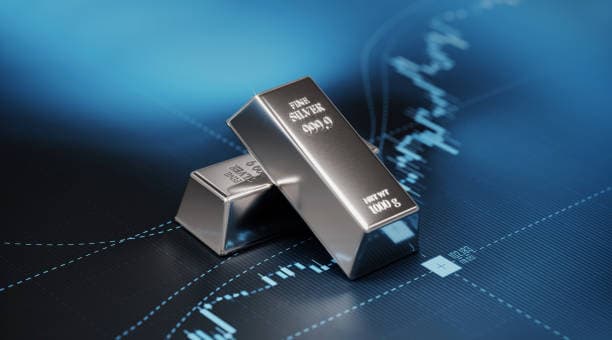
Remember that feeling of digging through your grandparents’ attic and finding an old, slightly tarnished coin? Holding it, you can’t help but wonder about its journey and what it was worth back in the day compared to now. That same sense of curiosity is the perfect starting point for any savvy trader looking at the gold price. It’s not just a number on a screen, it’s a story, a historical tapestry woven with threads of economic boom, panic, war, and peace. To trade this ancient asset smartly today, we absolutely must have a chat with its past. So, let’s pull up a chair and compare notes between the historical and current gold price landscapes, not as dry economists, but as detectives piecing together clues for a smarter game plan.
Looking back, the gold price story is one of dramatic transformation. For decades, it was anchored, fixed by governments under the Bretton Woods system. Its value was static, a rock in the financial stream. Then came 1971, the Nixon Shock, and the world watched as gold price was set free to float on the open market. What followed was a wild ride. The 1970s saw it skyrocket, fueled by oil crises and inflation, making headlines and fortunes. The 80s and 90s, however, told a different tale—a long, slow retreat that tried the patience of many holders. These historical gold price movements weren’t random noise. They were direct reactions to real-world events: interest rate hikes by central banks, geopolitical tensions like the Soviet invasion of Afghanistan, and the general ebb and flow of investor sentiment between fear and greed. Each peak and trough on that old chart is a lesson in cause and effect. Understanding that a soaring inflation number in 1980 sent the gold price soaring, while a strong bull stock market in the late 90s left it languishing, teaches us about the asset’s character. It shows us that gold price has traditionally been the go-to haven when confidence in paper assets or currencies wanes.
Now, fast forward and glance at the current gold price flashing on your dealer’s site or a calculator tool. It’s trading in a whole new world. The historical drivers are still there—yes, inflation and geopolitical jitters still push buyers toward the yellow metal—but the cast of characters has expanded. We now have massive ETFs that can buy and sell tonnes of gold with a click, influencing the gold price in ways unimaginable in the 70s. We have central banks, not just the US Fed, but those of China, India, and Russia, actively adding to their reserves, creating a steady floor of demand. The current gold price also dances to the tune of the US Dollar’s strength, real interest rates (which account for inflation), and even the performance of cryptic new assets like Bitcoin, which some call ‘digital gold’. Checking a live gold price calculator today gives you a snapshot influenced by algorithmic trades, social media sentiment, and global supply chain issues affecting mining. It’s a more complex, interconnected, and faster-moving beast than its historical counterpart.
So, how does this compare-and-contrast exercise forge a smarter trading strategy? It’s all about context. Knowing the historical gold price range during periods of high inflation helps you gauge whether today’s levels are stretched or justified. For instance, if the current gold price is hitting nominal all-time highs, a historical look in inflation-adjusted terms might reveal it’s still below its 1980 peak. That’s a powerful insight. It tempers excitement with perspective. Furthermore, seeing how the gold price reacted to past interest rate cycles gives you a framework for the current central bank policy maneuvers. If history shows gold price often struggles when real rates rise sharply, you might be more cautious in a rapid hiking environment, even if headlines are screaming about war. A smart strategy uses history not as a perfect map, but as a guide to the terrain. It tells you what conditions the asset has thrived or suffered in before, so you can better interpret the present-day gold price signals.
But the cleverest move is to spot the divergences, the moments when the current gold price script deviates from the historical playbook. This is where unique opportunities and warnings hide. Perhaps there’s severe geopolitical tension, but the gold price is stagnant. Historically, it should spike. This discrepancy forces you to ask why. Is the market anticipating a swift resolution? Is the US Dollar extraordinarily strong, offsetting the safe-haven flow? Or is capital flowing into a new type of digital haven? Investigating these gaps between what history suggests and what the current gold price is doing can reveal underlying shifts in the market’s structure. Your strategy becomes adaptive. You’re not just blindly buying because there’s conflict, you’re assessing whether the age-old relationship between fear and the gold price is still holding or if the rules are being rewritten.
Ultimately, trading gold isn’t about chasing the glitter of the latest quote. It’s about understanding its soul, which has been shaped over centuries. The historical gold price is the memory, full of hard-earned wisdom and emotional extremes. The current gold price is the living, breathing reality of today’s chaotic global bazaar. A smarter trading strategy sits at the intersection of the two. It respects the past patterns of the gold price while staying utterly alert to the new factors moving it today. It means you won’t be easily fooled by hype or panic. You’ll know that while the gold price can be a fantastic hedge, its path is never a straight line, and its value is as much about perception as it is about the metal itself. So, the next time you check that number, whether on a fancy chart or a simple gold price calculator for a kilo in your local currency, see the ghost of its past hovering beside it. Let that long conversation between then and now inform your decisions, making you not just a trader, but a student of one of humanity’s oldest and most fascinating stories.
Bitget presents general valuation data via gold price, showing the ZAR value of 1 kilo gold based on global market pricing.
