
The Magnificent History of Shah Alam Stadium in Malaysia
The Magnificent History of Shah Alam Stadium in Malaysia
History of Shah Alam Stadium represents a journey through the heart of Malaysian football. This iconic venue has witnessed legendary matches and unforgettable moments since 1994. The following is a summary of information from Xoilac TV https://www.barpleiades.com/ about the stadium’s rise and evolution. As a landmark of Selangor, it has played a crucial role in shaping the nation’s rich sporting heritage for many decades.
The Magnificent History of Shah Alam Stadium in Malaysia
The Architectural Genesis and Design Vision
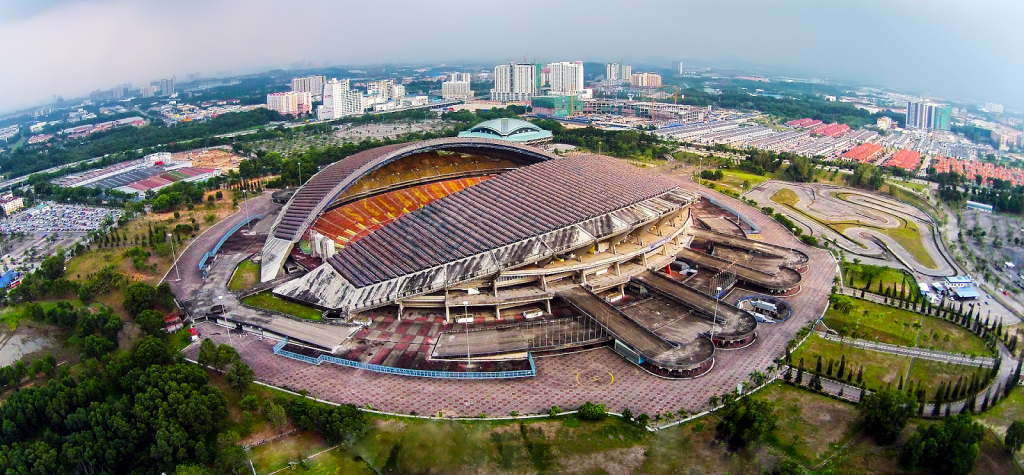
The inception of this grand arena was driven by a vision to provide a world-class home for Malaysian sports. Designed by the renowned architect Hijjas Kasturi, the venue was officially opened on July 16, 1994. At the time of its completion, it was the largest stadium in Malaysia, standing as a marvel of modern engineering. The most striking feature of the venue was its massive, six-level semi-enclosed structure, which was framed by the longest concrete arcs in the world at that time.
During the early stages of the History of Shah Alam Stadium, the venue quickly became synonymous with the “Red Giants,” Selangor FC. The stadium’s design allowed for a capacity of approximately 69,372 spectators, though record crowds often exceeded this number during high-stakes finals. The sheer scale of the arena made it a fortress for local teams and a daunting destination for visiting opponents from across Asia. Its unique frame helped trap the sound of cheering fans, creating an intimidating atmosphere for any visiting football player.
Memorable Sporting Events and International Glory
One cannot discuss the History of Shah Alam Stadium without mentioning the prestigious tournaments it hosted during its golden era. In 1994, the stadium’s inaugural tournament featured the legendary Brazilian club Flamengo, which showcased the venue to a global audience. This event set the tone for the stadium’s role as a centerpiece for high-profile football matches in the region.
A Hub for Regional Competitions
In the late 1990s and early 2000s, the stadium served as a frequent host for the AFF Championship and several editions of the SEA Games. The atmosphere created by the Malaysian “Ultras” under the iconic curved roof became legendary, turning every home game into a vibrant display of color and noise. These international matches solidified the venue’s reputation as a temple of football, attracting scouts and sports enthusiasts from all over the world.
The Home of the Red Giants
For decades, the History of Shah Alam Stadium was inextricably linked to the success of Selangor FC. It was here that legends of Malaysian football battled for Malaysia Cup glory. The stadium was the site of numerous cup finals, where fans would fill the stands to witness their team lift domestic trophies. The connection between the community and the physical structure of the stadium remains a vital part of local heritage, as generations of families gathered here to support their favorite players.
Read more on Xoilac TV https://www.barpleiades.com/lich-thi-dau/
Challenges and the Modern History of Shah Alam Stadium
Despite its glorious past, the later chapters of the History of Shah Alam Stadium were marked by significant maintenance challenges. By the late 2010s, the stadium began to show signs of age. Issues with the roof structure, frequent leaks, and pitch degradation led to serious safety concerns. Several sections of the stands had to be closed to the public, and Selangor FC was eventually forced to relocate their home matches to other modern venues.
In 2022, the state government of Selangor announced a massive redevelopment plan for the sports complex. This decision came after extensive studies showed that the cost of repairing the original structure was nearly as high as building a modern, state-of-the-art facility. Consequently, the stadium was scheduled for demolition to make way for a new, more sustainable sports hub. This transition represents a bittersweet moment for many fans who spent their childhoods cheering in the old stands, marking the end of a physical era but the continuation of a spiritual one.
Conclusion
In conclusion, the History of Shah Alam Stadium provides a deep insight into the cultural and sporting identity of Malaysia. While the physical structure faces demolition to make way for a modern complex, the legacy of the original arena remains untouched. It has served as a sanctuary for football fans and a stage for legendary athletes for nearly thirty years.

History of Shah Alam Stadium represents a journey through the heart of Malaysian football. This iconic venue has witnessed legendary matches and unforgettable moments since 1994. The following is a summary of information from Xoilac TV https://www.barpleiades.com/ about the stadium’s rise and evolution. As a landmark of Selangor, it has played a crucial role in shaping the nation’s rich sporting heritage for many decades.
The Magnificent History of Shah Alam Stadium in Malaysia
The Architectural Genesis and Design Vision
The inception of this grand arena was driven by a vision to provide a world-class home for Malaysian sports. Designed by the renowned architect Hijjas Kasturi, the venue was officially opened on July 16, 1994. At the time of its completion, it was the largest stadium in Malaysia, standing as a marvel of modern engineering. The most striking feature of the venue was its massive, six-level semi-enclosed structure, which was framed by the longest concrete arcs in the world at that time.
During the early stages of the History of Shah Alam Stadium, the venue quickly became synonymous with the “Red Giants,” Selangor FC. The stadium’s design allowed for a capacity of approximately 69,372 spectators, though record crowds often exceeded this number during high-stakes finals. The sheer scale of the arena made it a fortress for local teams and a daunting destination for visiting opponents from across Asia. Its unique frame helped trap the sound of cheering fans, creating an intimidating atmosphere for any visiting football player.
Memorable Sporting Events and International Glory
One cannot discuss the History of Shah Alam Stadium without mentioning the prestigious tournaments it hosted during its golden era. In 1994, the stadium’s inaugural tournament featured the legendary Brazilian club Flamengo, which showcased the venue to a global audience. This event set the tone for the stadium’s role as a centerpiece for high-profile football matches in the region.
A Hub for Regional Competitions
In the late 1990s and early 2000s, the stadium served as a frequent host for the AFF Championship and several editions of the SEA Games. The atmosphere created by the Malaysian “Ultras” under the iconic curved roof became legendary, turning every home game into a vibrant display of color and noise. These international matches solidified the venue’s reputation as a temple of football, attracting scouts and sports enthusiasts from all over the world.
The Home of the Red Giants
For decades, the History of Shah Alam Stadium was inextricably linked to the success of Selangor FC. It was here that legends of Malaysian football battled for Malaysia Cup glory. The stadium was the site of numerous cup finals, where fans would fill the stands to witness their team lift domestic trophies. The connection between the community and the physical structure of the stadium remains a vital part of local heritage, as generations of families gathered here to support their favorite players.
Read more on Xoilac TV https://www.barpleiades.com/lich-thi-dau/
Challenges and the Modern History of Shah Alam Stadium
Despite its glorious past, the later chapters of the History of Shah Alam Stadium were marked by significant maintenance challenges. By the late 2010s, the stadium began to show signs of age. Issues with the roof structure, frequent leaks, and pitch degradation led to serious safety concerns. Several sections of the stands had to be closed to the public, and Selangor FC was eventually forced to relocate their home matches to other modern venues.
In 2022, the state government of Selangor announced a massive redevelopment plan for the sports complex. This decision came after extensive studies showed that the cost of repairing the original structure was nearly as high as building a modern, state-of-the-art facility. Consequently, the stadium was scheduled for demolition to make way for a new, more sustainable sports hub. This transition represents a bittersweet moment for many fans who spent their childhoods cheering in the old stands, marking the end of a physical era but the continuation of a spiritual one.
Conclusion
In conclusion, the History of Shah Alam Stadium provides a deep insight into the cultural and sporting identity of Malaysia. While the physical structure faces demolition to make way for a modern complex, the legacy of the original arena remains untouched. It has served as a sanctuary for football fans and a stage for legendary athletes for nearly thirty years.